
Notes from the Streets
Learning to Walk
…or the one in which we identify whether a society is pedestrian friendly or car friendly.
As someone who does not own a vehicle (never even bothered learning to drive), my default mode of transportation has been either by foot or by public/semi-public transportation. Over the years, and having visited a fair amount of cities around the world, I agree with my urban planner/design colleagues that there are cities that are walkable (i.e., pedestrian friendly, either from an infrastructure perspective, or from an environment perspective, or both) and those that aren’t.
Cape Town, for example, has a mix of both—the temperate climate makes it comfortable to walk through the year, the infrastructure, though, is patchy. And the public transportation does not help. Big European cities (e.g., London, Paris) have great infrastructure, but there are the odd times when the environment is not conducive—they however make up for it with great public transportation. Indian cities aren’t usually walkable, but they do have working/workable public transportation systems.
My urban planner/design colleagues tend to focus on the infrastructure side of things in their ruminations—-even considering the infrastructure design choices that alleviate the environmental barriers to walkability.
However, they do not look at society. They do not look at whether the society they are designing for are accepting of “walkability” as a primary (or predominant) choice of mobility.
Let’s do a short show and tell here. Consider the following road layout.
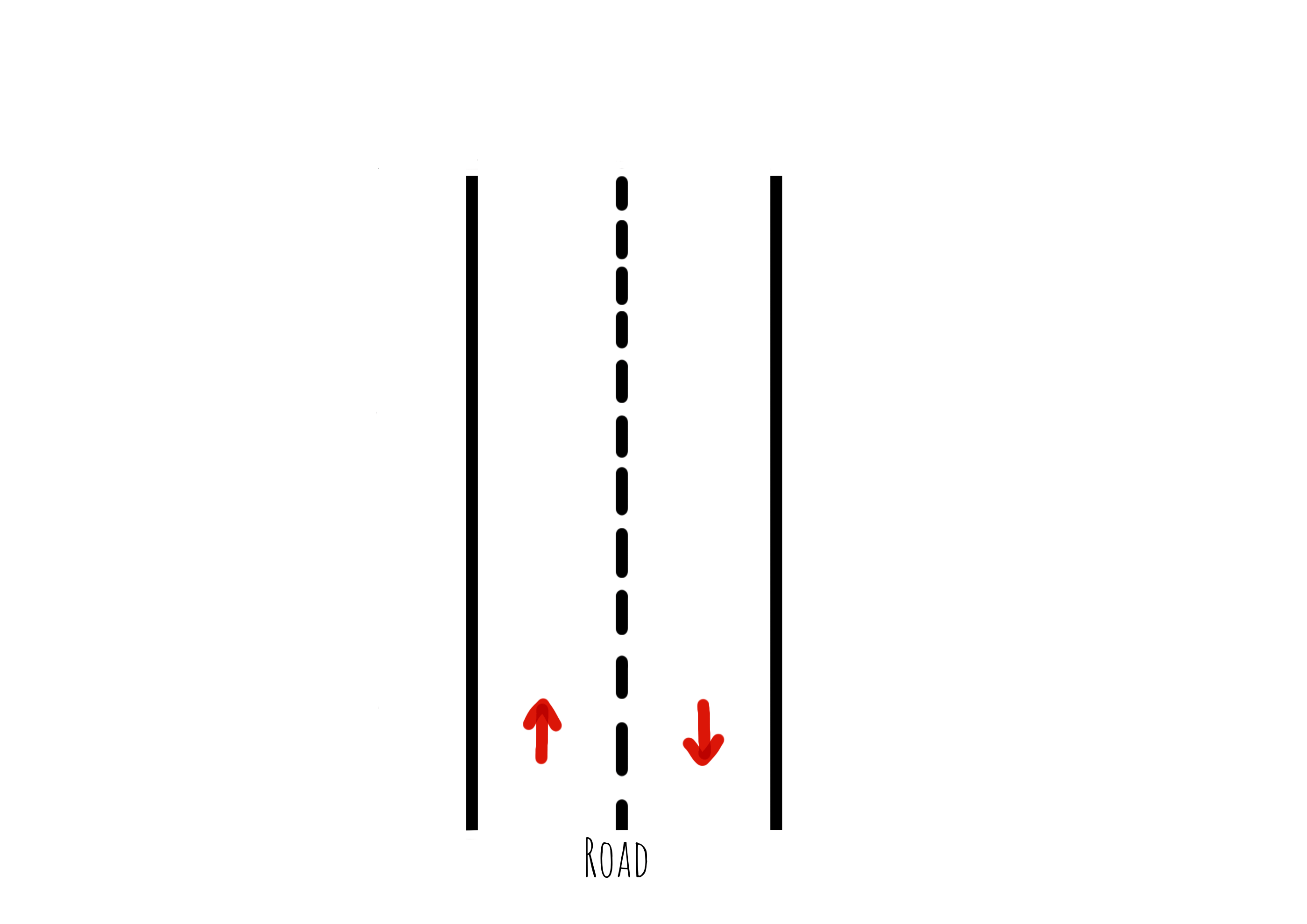
This is your typical road. Let’s assume a left-hand drive situation here, with the red arrows showing the flow of traffic.
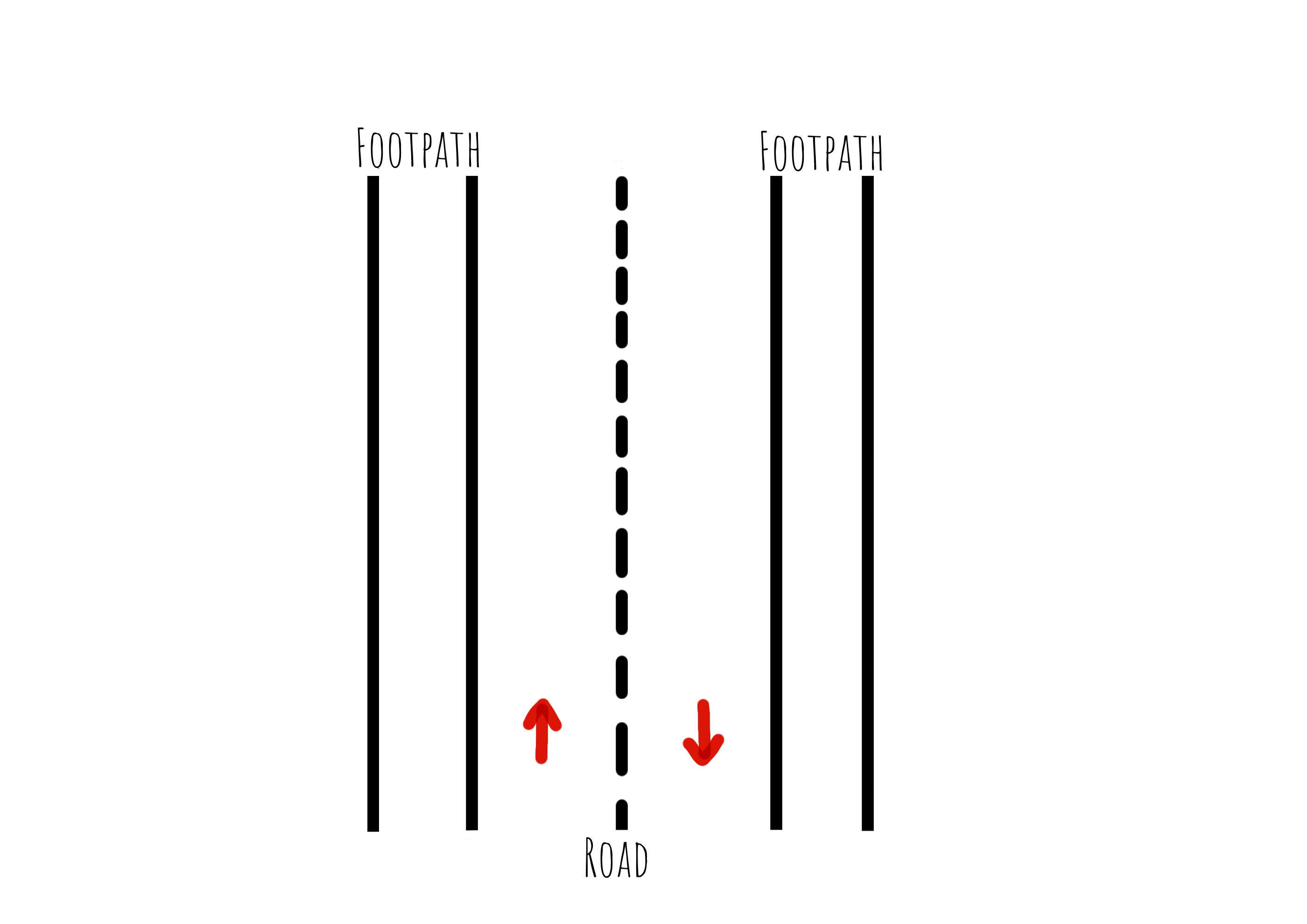
Let’s add two footpaths, on either sides of the road, in line with what traditional urban design demands.
…and to this, let’s add two possible flow channels for pedestrian traffic.
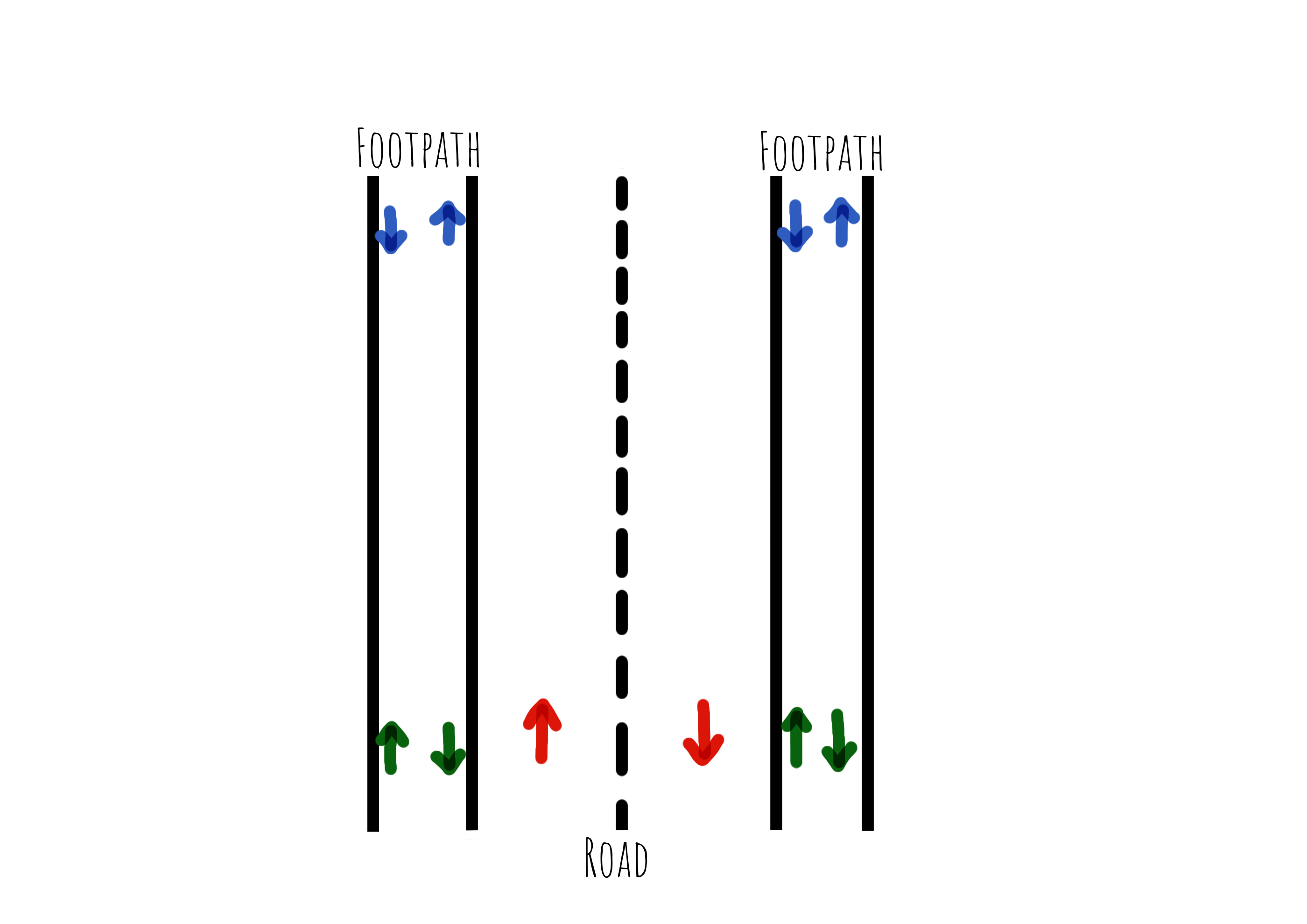
Which pedestrian flow channel is logical (and safe)?
If your answer was blue, then I’m afraid you are not part of a walking friendly society. Period.
There’s a logic here. Look at the green and blue flows. If you are following the blue flow lines, the channel closer to the road traffic has the approaching vehicles behind them, hence unable to sense any danger (i.e., oncoming traffic). This is corrected when you’re following the green flow lines. The channel closer to the road traffic flow can see and move out of the way of approaching danger.
Cities in Europe, many parts of Asia, and even in car friendly societies like the United States, respect such pedestrian flow. There’s always a seamless movement of pedestrians. Out in the sticks, where there are no footpaths, and people walk on the road shoulders, the logic is followed—always walk facing the flow of vehicular traffic.
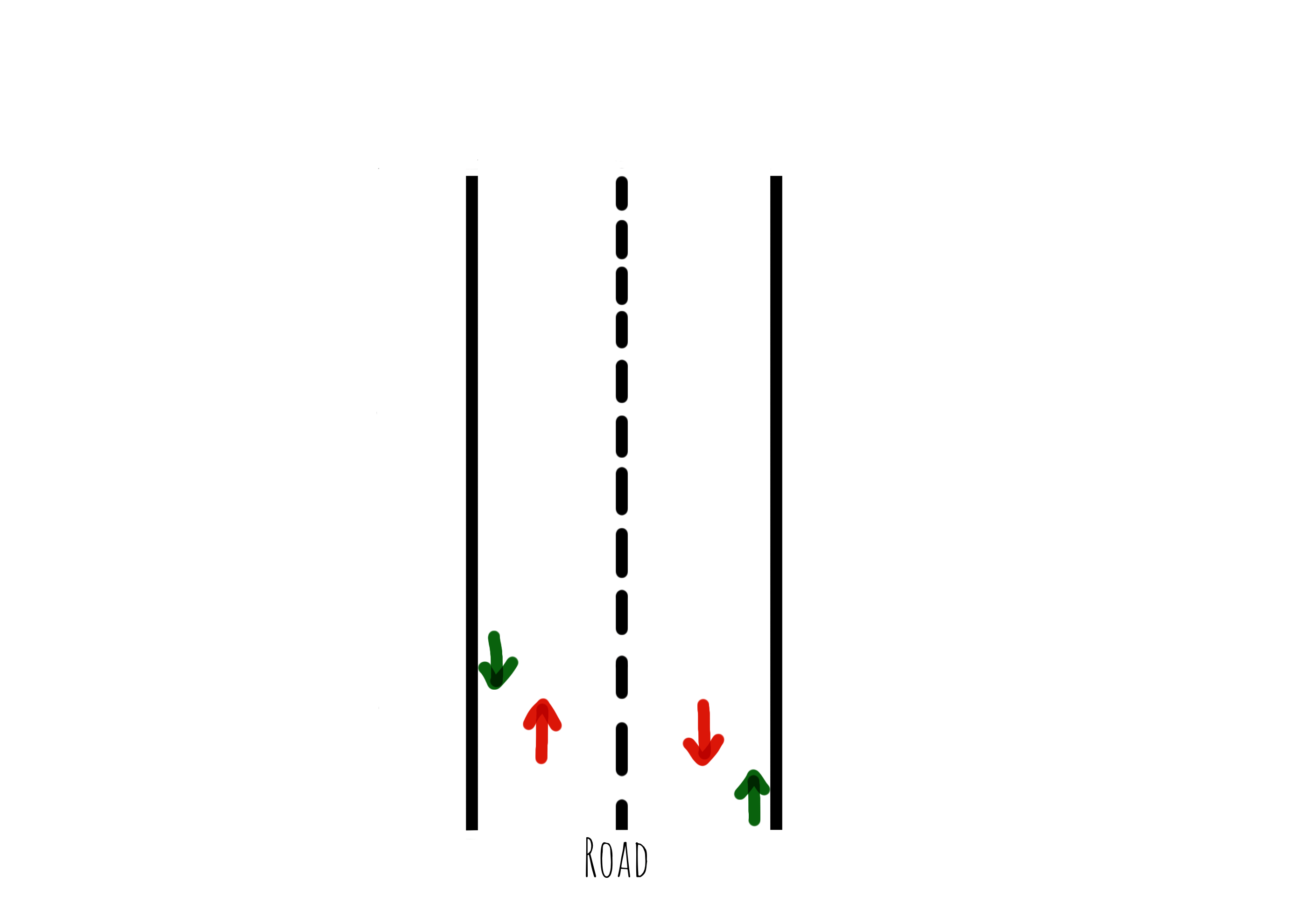
…and in places where there is sufficient space, oncoming vehicles even give walkers a wide berth.
I tend to observe walkers in every city I visit. And irrespective of the state of their public transportation infrastructure, and walkable infrastructures, when I notice that people do not walk in a logical manner, I am immediately intrigued.
Walking does not seem natural to them. Like in Cape Town.
Take other African cities. I remember walking a lot in Addis and Nairobi, for example—both with poor quality of public transportation, but the pedestrian flow logic was ingrained. Take other global South cities. Sao Paulo, Delhi—both have working public transportation, and logical pedestrian flows. Take global North cities—very well ingrained.
I personally have not been able to fathom why it is so different here. Yes, public transportation is a problem here, and one could argue that it forces lots of people to walk out of compulsion…then just the fact that there are so many people walking, should suggest that some form of “walking logic” would have emerged naturally?
But no. Randomness prevails. How does one design non-motorised transportation infrastructures for such societies?